123 Results for "

Cucurbita maxima Duch. ex Lam.

" in MedChemExpress (MCE) Product Catalog:
Products (123)

123 Results for "Cucurbita maxima Duch. ex Lam." in MCE Product Catalog:

44
44 Publications Verification
Cat. No.: HY-14644
CAS No.: 541550-19-0
Purity:  99.80%
Synonyms: STA 5326; LAM-002A free base; AIT-101
Research Areas:  

Inflammation/Immunology Cancer

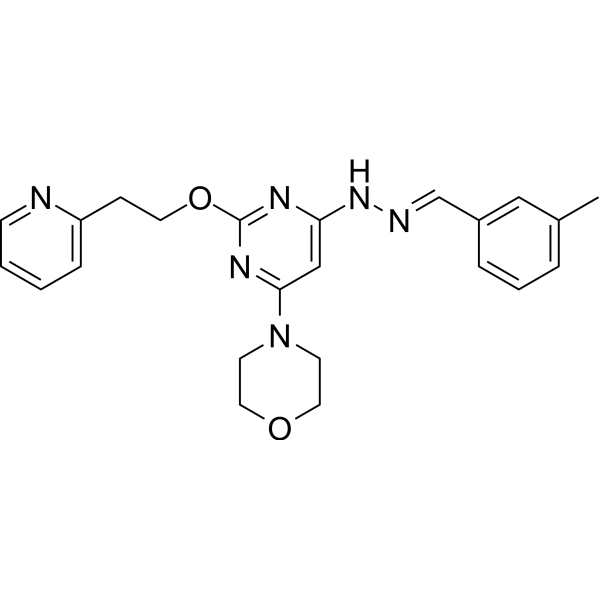
Apilimod (STA 5326) is a potent IL-12/IL-23 inhibitor, and strongly inhibits IL-12 with IC50s of 1 nM and 2 nM, in IFN-γ/SAC-stimulated human PBMCs and SAC-treated monkey PBMCs, respectively . Apilimod is a potent and highly selective PIKfyve inhibitor.
loading...
    loading...
44
44 Publications Verification
Cat. No.: HY-14644A
CAS No.: 870087-36-8
Purity:  99.83%
Synonyms: STA 5326 mesylate; LAM-002A; AIT-101 mesylate
Research Areas:  

Inflammation/Immunology Cancer

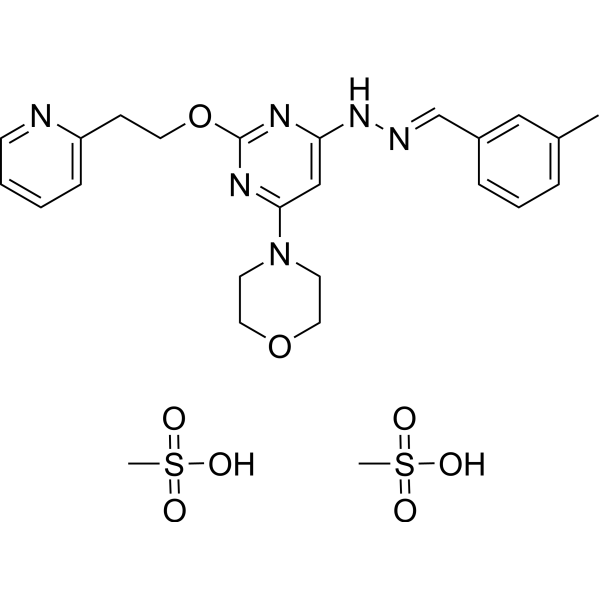
Apilimod (STA 5326) mesylate is a potent IL-12/IL-23 inhibitor, and strongly inhibits IL-12 with IC50s of 1 nM and 2 nM, in IFN-γ/SAC-stimulated human PBMCs and SAC-treated monkey PBMCs, respectively . Apilimod is a potent and highly selective PIKfyve inhibitor.
loading...
    loading...
17
17 Cited Publications
Cat. No.: HY-126823
CAS No.: 234075-45-7
Purity:  95.33%
Synonyms: PGSK diacetate (5/6-mixture)
Target:  

Fluorescent Dye

Research Areas:  

Others

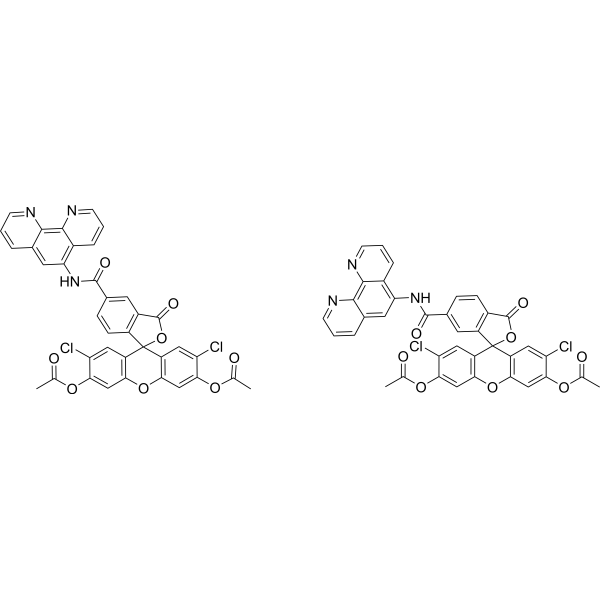
Phen green SK (PGSK) diacetate (PGSK diacetate (5/6-mixture)) is a metal ion-sensitive fluorescent probe that can penetrate cell membranes. Phen green SK (PGSK) diacetate can react with a variety of metal ions, including Fe 2+, Cd 2+, Co 2+, Ni 2+, Zn 2+, etc. Phen green SK (PGSK) diacetate chelates Fe 2+, resulting in fluorescence quenching, which can be restored when a membrane-permeable chelator is added, thereby reflecting the changes in the intracellular chelatable iron pool. The excitation/emission maxima of Phen green SK diacetate are 507/532 nm, respectively .
loading...
    loading...
3
3 Cited Publications
Cat. No.: HY-B0337
CAS No.: 122-11-2
Synonyms: Sulphadimethoxine
Target:  

Bacterial Antibiotic

Research Areas:  

Infection

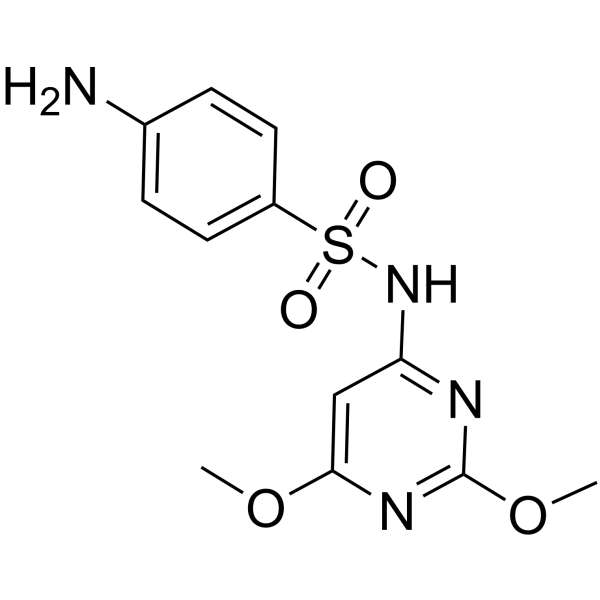
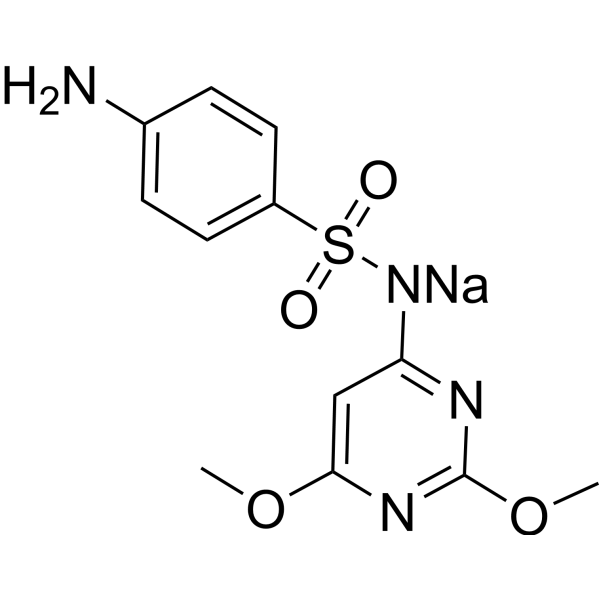
Sulfadimethoxine (Sulphadimethoxine) is an orally active sulfonamide antibiotic. Sulfadimethoxine reduces Eimeria-related mortality, weight loss, and lesions. Sulfadimethoxine can be used for the research of avian coccidiosis .
loading...
    loading...
3
3 Cited Publications
Cat. No.: HY-B0337A
CAS No.: 1037-50-9
Synonyms: Sulphadimethoxine sodium
Target:  

Bacterial Antibiotic

Research Areas:  

Infection

Sulfadimethoxine (Sulphadimethoxine) sodium is an orally active sulfonamide antibiotic. Sulfadimethoxine sodium reduces Eimeria-related mortality, weight loss, and lesions. Sulfadimethoxine sodium can be used for the research of avian coccidiosis .
loading...
    loading...
1
1 Cited Publications
Cat. No.: HY-D0941
CAS No.: 150322-05-7
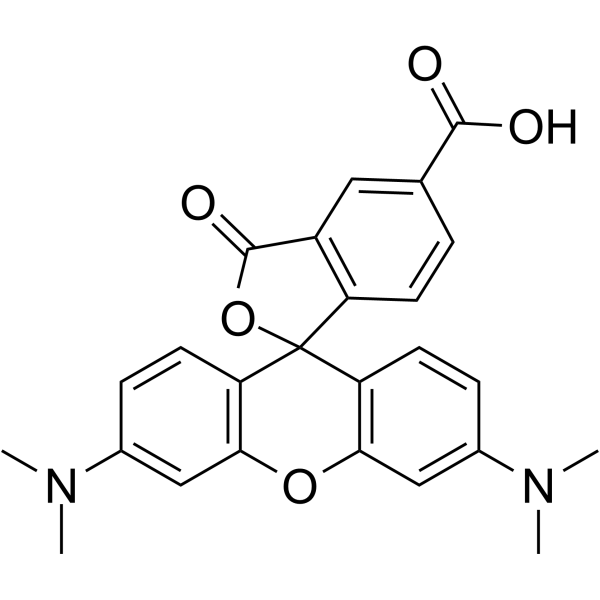
5-Carboxytetramethylrhodamine can be used as a fluorescent probe of nucleic acids and proteins. 5-Carboxytetramethylrhodamine displays excitation maxima of 558 nm and an emission maximum of 586 nm .
loading...
    loading...
Cat. No.: HY-D0069
CAS No.: 76877-33-3
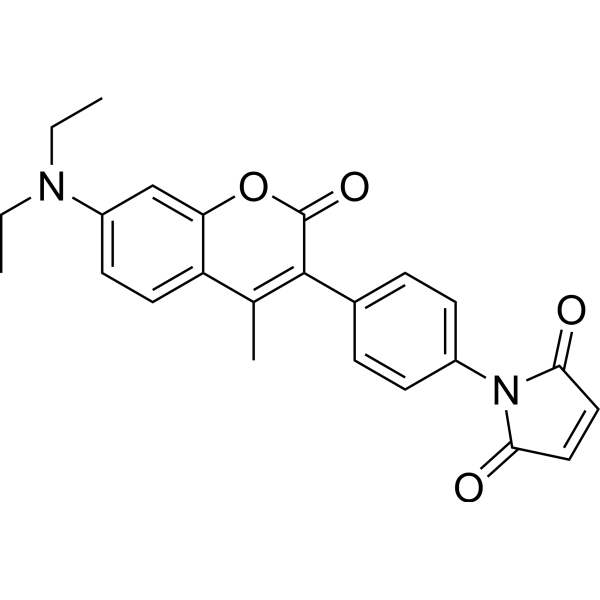
CPM is a maleimide derivative, acting as a blue fluorescent thiol-reactive dye (excitation/emission maxima of 387/463 nm) .
loading...
    loading...
Cat. No.: HY-D0073
CAS No.: 771-97-1
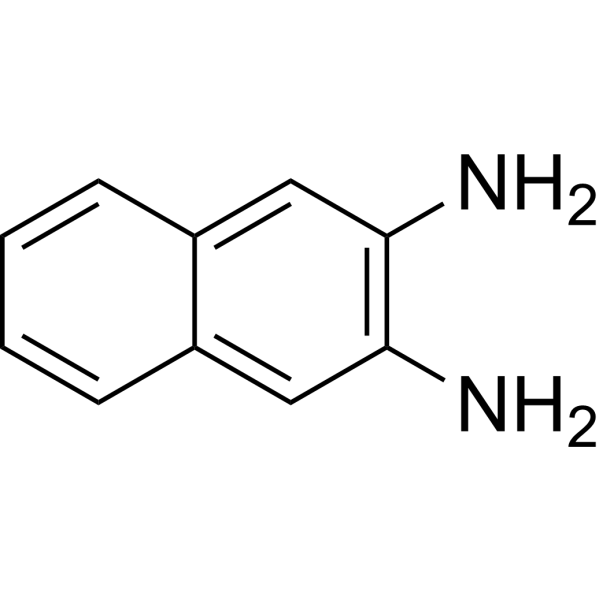
2,3-Diaminonaphthalene is a fluorescent reagent used to detect selenium and nitric oxide (NO). 2,3-Diaminonaphthalene binds to selenium to form pyrazolene selenol, with excitation/emission maxima at 365 nm and 525 nm, respectively. 2,3-Diaminonaphthalene binds to NO2− to form the fluorescent product, 1-(H)-napthotriazole, with excitation/emission maxima at 360 nm and 440 nm, respectively .
loading...
    loading...
Cat. No.: HY-110213
CAS No.: 380367-48-6
Purity:  99.24%
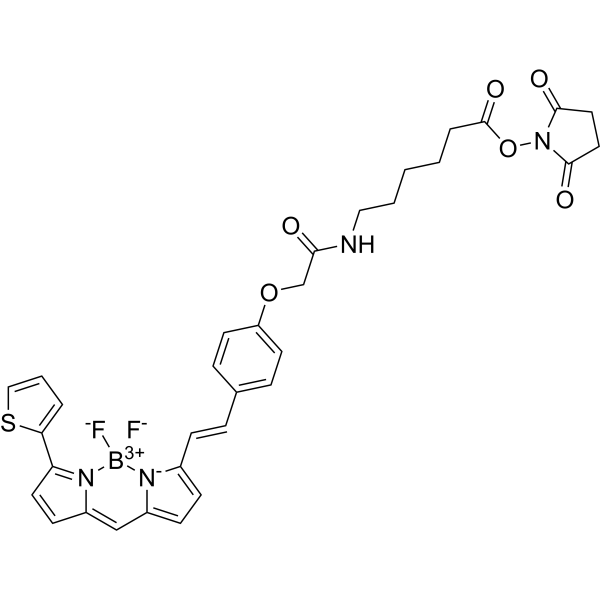
BODIPY 630/650X is a red fluorescent dye that targets amine groups. BODIPY 630/650X displays excitation/emission maxima of 630/650 nm, respectively. BODIPY 630/650X can be used to covalently label proteins, antibodies, or other amine-containing biomolecules for detection and imaging .
loading...
    loading...
Cat. No.: HY-129467
CAS No.: 56472-29-8
Purity:  ≥98.0%
Synonyms: 2-Hydroxyoleic acid; 2-OHOA; LAM561
Target:  

Apoptosis

Research Areas:  

Cancer

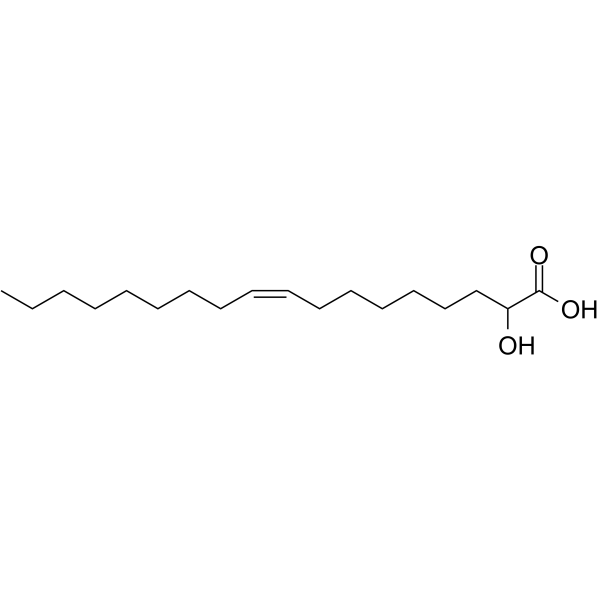
(Rac)-Idroxioleic acid (2-Hydroxyoleic acid) is a synthetic oleic acid (OA) derivative that binds to the plasma membrane and alters lipid organization. (Rac)-Idroxioleic acid has anti-tumor effect .
loading...
    loading...
Cat. No.: HY-168375
CAS No.: 1246809-50-6
Target:  

Fluorescent Dye

Research Areas:  

Metabolic Disease

BODIPY-Palmitate is a fluorescently labeled palmitic acid (HY-N0830), with excitation/emission maxima at 488/508 nm. BODIPY-Palmitate can be used to detect fatty acid uptake and metabolism .
loading...
    loading...
Cat. No.: HY-D1044
CAS No.: 64339-18-0
Synonyms: Rhodamine 640 chloride
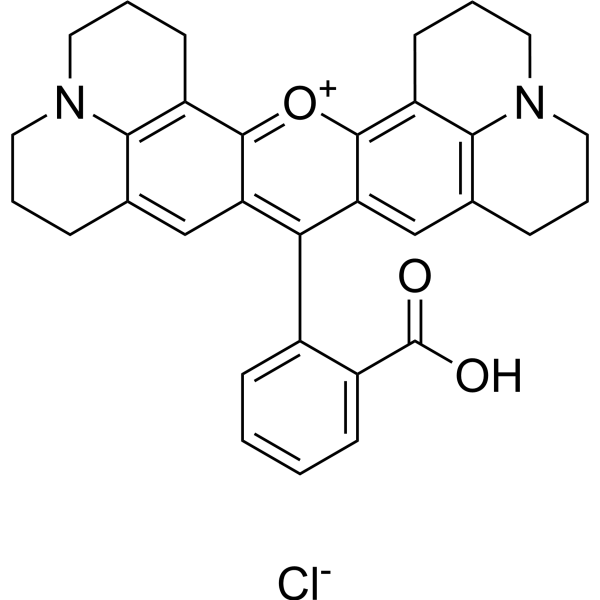
Rhodamine 101 chloride (Rhodamine 640 chloride) is a fluorescent dye with excitation and emission maxima at 565 nM and 595 nM, respectively. Rhodamine 101 chloride binds to intracellular proteins and emits specific fluorescence. Rhodamine 101 chloride can be used in colon cancer research .
loading...
    loading...
Cat. No.: HY-N8503
CAS No.: 147821-49-6
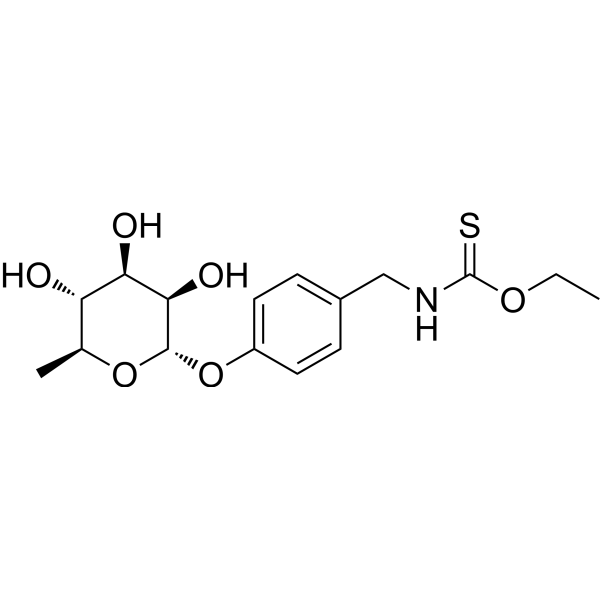
Niazimicin can be isolated from seeds and leaves of Moringa oleifera Lam. Niazimicin is thiocarbamate compound .
loading...
    loading...
Cat. No.: HY-20899
CAS No.: 52448-17-6
Synonyms: 6BrW
Target:  

Bacterial

Research Areas:  

Others

6-Bromo-L-tryptophan (6BrW) is a compound that can be incorporated into recombinant proteins by a specific system in bacterial cells, causing a blue shift in fluorescence emission and absorption maxima.
loading...
    loading...
Cat. No.: HY-158739
CAS No.: 2740257-94-5
Purity:  98.0%
Rhodamine dithenoyl hydrazide (probe 1) possesses excellent recognition and selectivity for Fe 3+ ion. Rhodamine dithenoyl hydrazide exhibits Excitation/Emission maxima of 543/550-700 nm, respectively .
loading...
    loading...
Cat. No.: HY-131006
CAS No.: 2080306-27-8
Purity:  ≥99.0%
Target:  

Monoamine Transporter

Research Areas:  

Neurological Disease

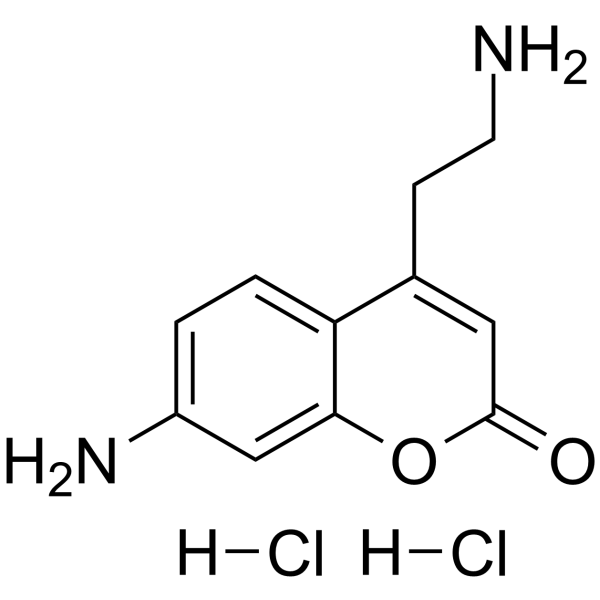
FFN200 dihydrochloride, a fluorescent substrate of VMAT2, selectively trace monoamine exocytosis in both neuronal cell culture and brain tissue. The fluorescence excitation and emission maxima of FFN200 are determined to be 352 and 451 nm, respectively .
loading...
    loading...
Cat. No.: HY-D1504
CAS No.: 110992-55-7
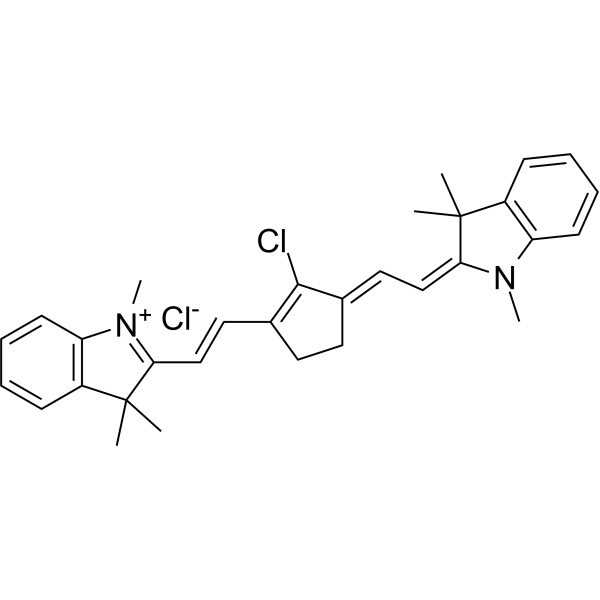
IR-797 chloride is a near-infrared (NIR) dye. IR 797 has absorption maxima near 700 nm. IR-797 shows some aggregation-induced-emission (AIE) properties. IR-797 shows shows cytotoxic .
loading...
    loading...
Cat. No.: HY-169491
CAS No.: 1224691-12-6
Target:  

Fluorescent Dye

Research Areas:  

Metabolic Disease

Pantothenate-AMC is a fluorogenic substrate used for detecting the enzymatic activity of vanin-1, an enzyme involved in the recycling of L-pantothenic acid. Upon enzymatic cleavage by vanin-1, 7-amino-7-methylcoumarin (AMC) is released, and its fluorescence can be used to quantify vanin-1 activity. The excitation/emission maxima of AMC are 340-360 nm and 440-460 nm, respectively .
loading...
    loading...
Cat. No.: HY-D1240
CAS No.: 116450-56-7
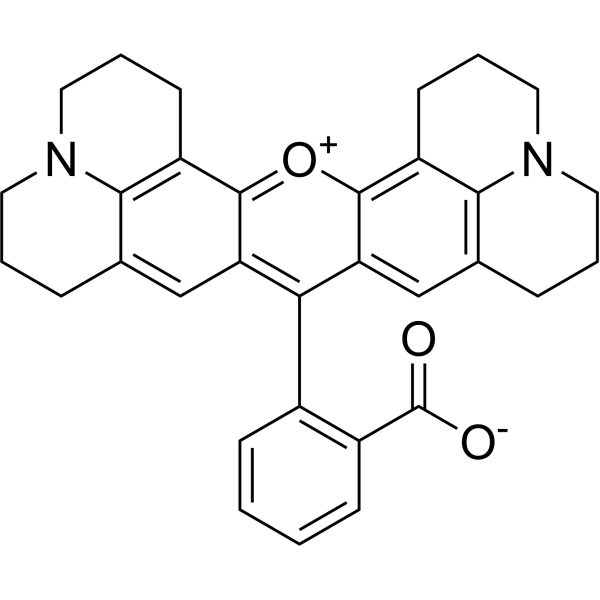
Rhodamine 101 inner salt is a bright fluorescent dye with excitation and emission maxima at 565 and 595 nm, respectively. It can be used in various biological applications such as fluorescence microscopy, flow cytometry, fluorescence correlation spectroscopy, and ELISA.
loading...
    loading...
Cat. No.: HY-131007
CAS No.: 2341841-05-0
Purity:  ≥99.0%
Target:  

Adrenergic Receptor

Research Areas:  

Metabolic Disease

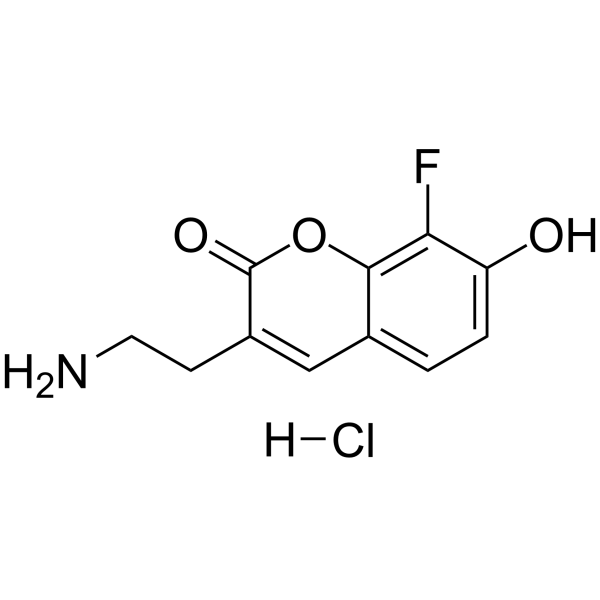
FFN270 hydrochloride, a fluorescent tracer of norepinephrine, is a fluorescent substrate of the norepinephrine and vesicular monoamine transporters. FFN270 hydrochloride exhibits two resolved absorption/excitation maxima depending on solvent pH (FFN270 ex: 320 nm or 365 nm, em: 475 nm) and can function as ratiometric fluorescent pH-sensors .
loading...
    loading...

